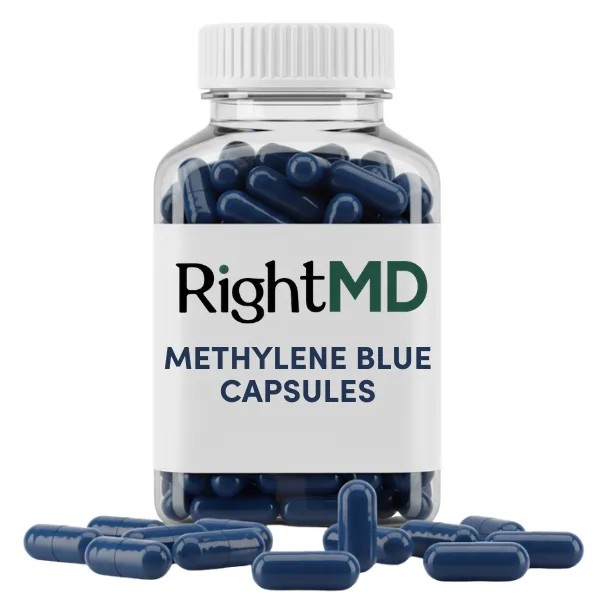
Methylene Blue is a pharmaceutical-grade compound used in medical, diagnostic, and research applications. Also known as methylthioninium chloride, it supports redox balance and cellular oxygen pathways. While used widely in clinical settings, only specific indications are FDA-approved. For safe access to USP-grade Methylene Blue, consult a licensed clinician.
Methylene Blue (generic; medical name Methylthioninium Chloride) is FDA-approved in the United States for the treatment of acquired methemoglobinemia, a serious condition in which hemoglobin cannot carry oxygen effectively. The approved form—ProvayBlue®—is administered intravenously in controlled clinical settings under licensed medical supervision.
These are the only U.S. FDA-approved uses for pharmaceutical-grade Methylene Blue.
For safe access—whether you’re looking to buy medical-grade Methylene Blue, explore its hospital-approved indications, or speak with a clinician familiar with its therapeutic use—consult a licensed healthcare provider or pharmacist to ensure the correct formulation, dosing, and medical oversight.
Research continues into Methylene Blue for a variety of investigational uses, including cognitive support, antiviral pathways, and cellular energy studies, but evidence remains limited. Methylene Blue is not FDA-approved for COVID-19, cognitive enhancement, mood, aging, or cancer treatment outside clinical trials—do not self-medicate or use non-medical-grade products. Only use Methylene Blue if prescribed and monitored by a licensed healthcare provider.
In oncology, laboratory and early clinical studies explore Methylene Blue for potential antitumor, metabolic, and redox-modulating effects, but it does not replace FDA-approved cancer treatments such as chemotherapy, radiation, surgery, targeted therapy, or immunotherapy. If used by a licensed physician, Methylene Blue should only be considered a supportive or complementary therapy, not a stand-alone cancer treatment.
If you’re searching to buy Methylene Blue, explore OTC or research-grade options, or speak with a Methylene Blue–prescribing clinician for investigational questions (cancer research, cognitive studies, mitochondrial support), consult a licensed provider to confirm safety, dosing, and legal availability in your state.
Methylene Blue is a widely used medical and diagnostic compound available under several pharmaceutical brand names around the world. In the United States, it is marketed primarily as ProvayBlue® (USP-grade), the FDA-approved formulation for treating acquired methemoglobinemia. Other medical formulations include Urolene Blue and various sterile hospital preparations used for diagnostics, surgical staining, and therapeutic applications.
Across Europe and Latin America, Methylene Blue is commonly supplied under names such as Methylthioninium Chloride, Bleu de Méthylène, and branded diagnostic dyes used in operating rooms and laboratories. In Asia, medical-grade Methylene Blue is distributed by established pharmaceutical manufacturers for clinical and research use, ensuring high purity and controlled dosing.
Industrial, aquarium, or textile-grade methylene blue—often sold as dye or antiseptic—should never be used for human treatment due to impurities and toxic additives. Only pharmaceutical or USP-grade Methylene Blue produced for medical use is considered safe for therapeutic purposes.
At RightMD, we offer authentic Ivermectin tablets for humans in the USA, available in strengths ranging from 9 mg to 65mg for safe and effective treatment. Each tablet contains premium Ivermectin USP, ensuring high purity, fast absorption, and consistent results. Commonly prescribed for scabies, strongyloidiasis, and parasitic infections, Ivermectin remains one of the most reliable antiparasitic medications worldwide. You can buy Ivermectin online in the USA securely through RightMD with verified quality, prescription support, and fast delivery.
Methylene Blue can cause mild, usually short-lasting Methylene Blue can interact with several medication classes, most notably antidepressants such as SSRIs, SNRIs, TCAs, and MAOIs, significantly increasing the risk of serotonin syndrome. It may also interact with stimulant medications, opioids with serotonergic activity, and drugs that affect liver enzyme pathways. Certain supplements—especially those marketed for mood, energy, or neurotransmitter support—may also increase interaction risk. Always review all prescription medications, over-the-counter products, vitamins, and herbal supplements with your clinician before starting Methylene Blue to ensure safe, supervised use.Methylene Blue can interact with several medication classes, most notably antidepressants such as SSRIs, SNRIs, TCAs, and MAOIs, significantly increasing the risk of serotonin syndrome. It may also interact with stimulant medications, opioids with serotonergic activity, and drugs that affect liver enzyme pathways. Certain supplements—especially those marketed for mood, energy, or neurotransmitter support—may also increase interaction risk. Always review all prescription medications, over-the-counter products, vitamins, and herbal supplements with your clinician before starting Methylene Blue to ensure safe, supervised use.such as nausea, dizziness, headache, stomach upset, or a temporary blue discoloration of urine or skin. Less common reactions may include mild anxiety, restlessness, increased heart rate, or slight sweating due to its MAOI activity. These effects typically resolve as the medication clears from the system. Serious reactions are more likely in people taking antidepressants or serotonergic drugs, as Methylene Blue can increase the risk of serotonin syndrome.
Seek urgent care for signs of allergy (hives, facial swelling, difficulty breathing), severe skin reactions, chest pain, confusion, high fever, sudden high blood pressure, or uncontrollable shaking. Individuals with G6PD deficiency, kidney disease, lung disorders, or those on SSRIs/SNRIs/MAOIs should consult a clinician before treatment, as they may require alternative options or close monitoring.
Methylene Blue can interact with several medication classes, most notably antidepressants such as SSRIs, SNRIs, TCAs, and MAOIs, significantly increasing the risk of serotonin syndrome. It may also interact with stimulant medications, opioids with serotonergic activity, and drugs that affect liver enzyme pathways. Certain supplements—especially those marketed for mood, energy, or neurotransmitter support—may also increase interaction risk. Always review all prescription medications, over-the-counter products, vitamins, and herbal supplements with your clinician before starting Methylene Blue to ensure safe, supervised use.
If you’re searching for how to take Methylene Blue safely, Methylene Blue dosage guidance, or the best way to use pharmaceutical-grade Methylene Blue, proper administration is essential for safety and effectiveness. Only use USP-grade or prescription formulations, and take Methylene Blue exactly as directed by your clinician. It may be taken with or without food, but swallow the dose as instructed—do not mix it with unverified powders, dyes, or non-medical products. If you use supplements such as magnesium, nootropics, amino acids, or mitochondrial support blends, keep them spaced from your Methylene Blue dose unless your provider approves the combination, as interactions can occur. Never combine Methylene Blue with alcohol or serotonergic herbal products, which may increase the risk of adverse reactions. Whether you are using it for a medically approved indication or seeking guidance on where to buy Methylene Blue online in the USA, always follow licensed medical supervision. At RightMD, we review current clinical research to provide safe, evidence-based instructions for proper Methylene Blue use.








.svg)
.svg)







.webp)




.png)
.svg)
.svg)
.png)
.png)
.webp)



.webp)
.webp)
.webp)
.webp)
.webp)
.png)

.webp)